
As someone new to the idea of a full outdoor preschool, I had my doubts at first. Yes, instead of seeing butterflies in black and white, the children in Roots and Boots get to see them in real life. But the question now goes to “is that really necessary?” Furthermore, it seemed counterintuitive to surround young,energetic children in such a dynamic outdoor environment where they can be distracted easily. Looking back, that was a naive thought.
In Roots and Boots, we see the outdoor natural environment as a form of support for the children’s learning, acting as their teacher. Being in nature boosts their thirst to learn and quenches it, as there is so much more to see, so much more to feel, and so much more to discover.
In one of our classes, we tried to introduce the honey-making process to the children. We started off by reading a few storybooks about bees. However, judging by their posture, they seemed restless and uninterested. The turning point came when one of the children picked up a stick and started to imitate a bee. We then “flew” around looking for flowers and danced to notify other bees before bringing back the nectar to our “hive” to “make honey”. Not only did the activity complement the steps of honey-making in the storybook, it also gave the children a taste of the exciting honey-making process. These impromptu activities seemed only possible in a nature setting where the children are free to unleash their creativity and make use of the environment.
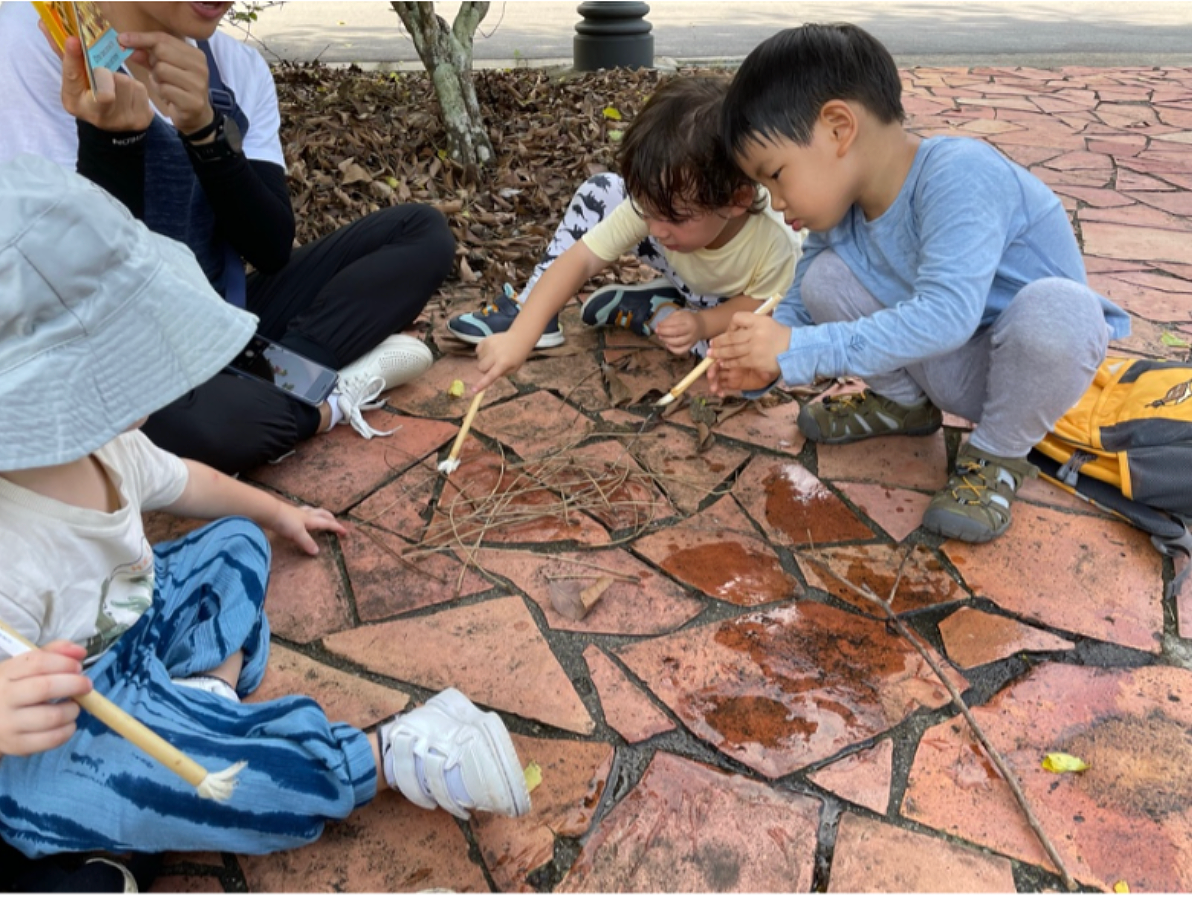
Through exploration and play, they inevitably develop self-motivation, becoming confident in their ability to learn and grow independently. This boosts their academic competence and therefore achieve similar goals as other traditional classrooms.
“Don’t just tell children the world, show them” – Penny Whitehouse
Here at Roots and Boots, we don’t just describe the world in bits and pieces of information, we journey with the children to show them exactly what we mean. We break down the walls of the classroom and open them up to the world, so that the children can enjoy the freedom of learning.